
When you buy a tokenized share of Bending Spoons, what are you actually holding?
A claim on a real company? A code on a ledger? Or just another bridge that could collapse?
Last week, Bending Spoons hit Nasdaq at a $25.7B valuation. But they didn't just go public the old way. They also issued tokenized shares — a token that supposedly represents one share of the company, tradeable on crypto rails.
Sound familiar? It should. We've been here before. I've been in this space since 2018, and I've watched tokenized assets promise a revolution — only to leave holders holding nothing but a broken link to a legal contract in a drawer somewhere.
Today, I want to break down what this listing actually means, not from the conference room, but from the community floor. The hands that hold these tokens. The risk that the bridge bends before it spoons.
Context: The Tokenized Share Promise
Bending Spoons is a real company — apps, revenue, employees. By issuing tokenized shares on Nasdaq, they're trying to straddle two worlds: traditional equity with crypto liquidity.
The idea is alluring. 24/7 trading, global access, fractional ownership, no middlemen. But the reality is far more fragile than the narrative.
Tokenized shares rely on a chain of trust: a custodian holds the real shares, a smart contract mints the token, an oracle reports the price, and a legal agreement says you can redeem at any time. Break any link, and your token becomes a worthless entry on a blockchain.
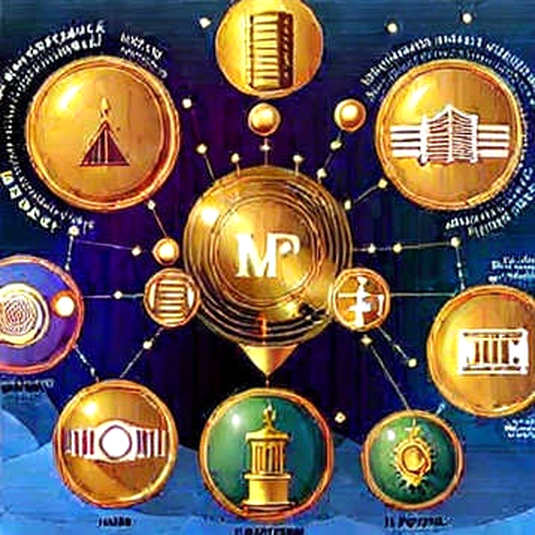
Core: The Four Links That Demand Your Scrutiny
I've spent years analyzing tokenized assets — from my early days in ICOs to auditing DeFi bridges. Every time, the failure point is the same: trust assumptions that no one wants to talk about.
Let's look at the four critical links in this chain:
1. Custody of the Real Shares
Who holds the underlying equity? Is it a regulated bank? A crypto custodian? A multisig wallet? In bull markets, nobody asks. But when the next crash comes — and it will — the custodian's solvency matters. If they go bankrupt, your token might be clawed back by creditors.
I saw this happen in 2020 with a tokenized real estate project. The legal entity holding the deeds was a shell in the Cayman Islands. When the market turned, investors discovered their tokens were just IOUs from a company that had already filed for protection.
2. The Smart Contract
Tokenization is code. And code has bugs. Even audits miss things. If the mint function is incorrectly permissioned, someone could mint infinite tokens. If the burn function is broken, redemption fails. These aren't theoretical — they've happened repeatedly in the DeFi space.
Bending Spoons has not published an audit of their tokenization contract as far as I can tell. For a $25.7B valuation, that's a red flag the size of a Nasdaq banner.
3. The Oracle Price Feed
The token's price should track the Nasdaq price. But who feeds that data? A trusted oracle like Chainlink? Or a single source? If the oracle manipulates the price — even accidentally — arbitrage bots will drain liquidity, and holders will be left with a token that trades at a discount or premium to the real stock.
I've seen this happen on tokenized gold products. The price deviated by 5% for days during a flash crash. Only the arbitrageurs won. The community held the bag.
4. The Legal Redemption Mechanism
This is the biggest blind spot. Can you actually redeem your token for the real stock? What's the process? Does it require KYC? Is there a minimum? What happens if the issuer decides to shut down the tokenization program?
In 2018, I invested in a tokenized startup that promised quarterly buybacks. The smart contract worked perfectly. But the company's board voted to stop the program. The tokens became worthless. The hands that held them were left empty.
Contrarian: The Hype Is a Distraction
Every retail investor I see right now is excited about "crypto stocks." They think this is the future. But the smart money — the institutional players who actually understand these structures — they're not buying the token. They're buying the real equity on Nasdaq.
Why? Because the token has no advantage if you're a large player. You want dividends? The real share pays them. You want voting rights? The real share gives them. You want liquidity? The real share trades on the world's most liquid market.
The token is for the retail investor who can't access Nasdaq directly. It's a product. And products have fees, spreads, and counterparty risk.
I've run a copy trading community for years. I've watched people chase narrative after narrative — NFTs, gaming, layer-2s. Every time, the ones who lose are the ones who don't ask the hard questions about what they're actually holding.
Bending Spoons tokenized shares are no different. The underlying company is likely solid. But the wrapper? That's where the risk lives.
Takeaway: Trust the Hands, Not Just the Charts
So what do you do with this information?
First, if you're considering buying these tokens, ask for the audit. Ask who the custodian is. Ask what the redemption process looks like. If the team can't answer clearly, walk away.
Second, don't confuse tokenization with innovation. It's just a wrapper. The real value is still in the company's earnings, not the blockchain hype.
Third, remember why you're in crypto: to build a system that doesn't rely on trust in middlemen. Tokenized shares on Nasdaq are the opposite of that. They are trust wrapped in code.
Community first, coins second. Always.
I've been through the 2018 graveyard. I've seen the Terra collapse. I've watched tokens turn to dust when the trust broke. The only way we survive is by looking out for each other. Share this article. Ask the hard questions. Protect your hands.
Trust the hands, not just the charts.
Follow the people, follow the profit.
Now, go check your portfolio. If you hold any tokenized asset, verify the chain of custody. Your future self will thank you.